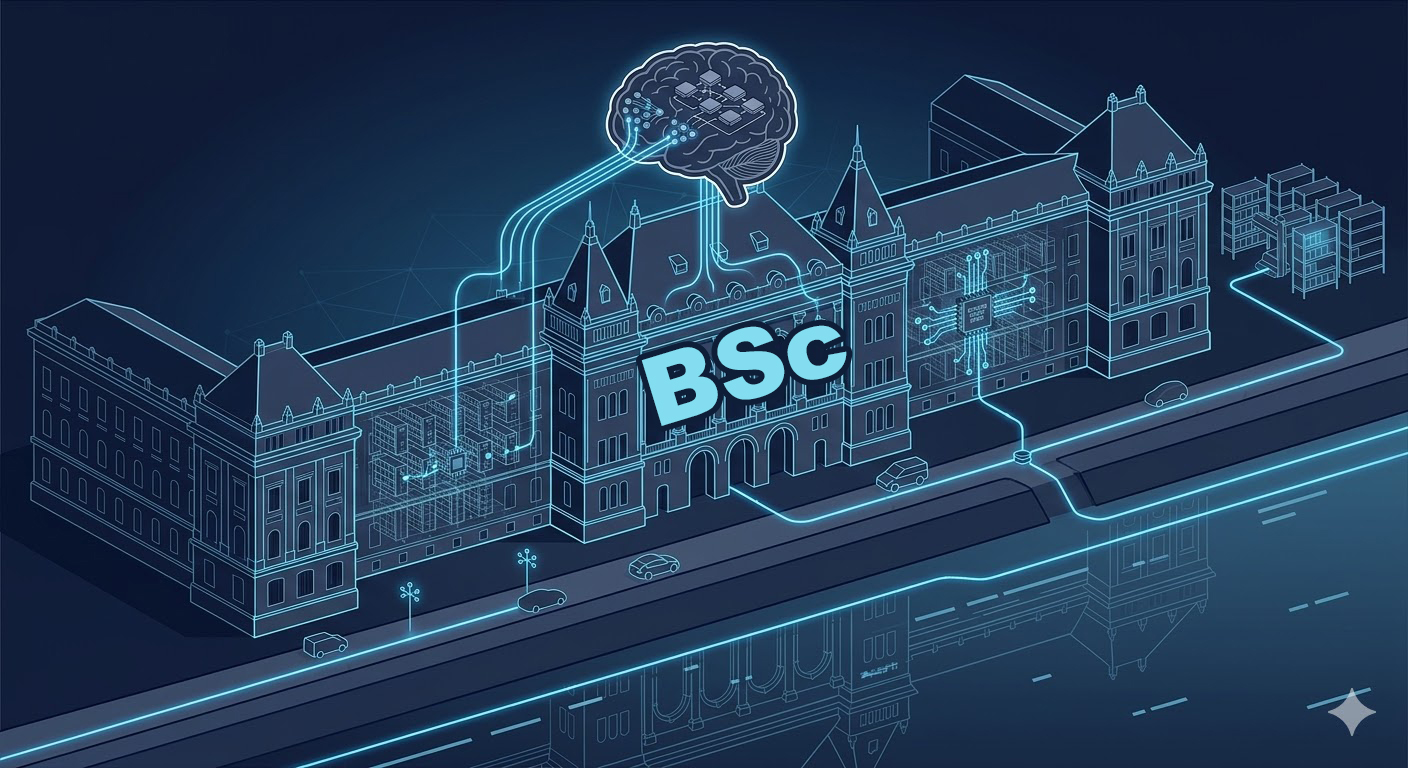
Our Department plays an active role in the educational tasks of the Transportation Engineering, Vehicle Engineering, and Logistics Engineering undergraduate programs.
1. Core Knowledge Across All Three Programs (Common Engineering Foundation)
These subjects provide the necessary systems-thinking approach and the hardware/software foundation required for automation tasks in transportation, vehicles, and logistics:
- Electrotechnics and Electronics: Fundamental engineering knowledge regarding basic electronic components, amplifier and switching circuits, as well as the operating principles and applications of electrical machines.
- Programming: Development of algorithmic thinking for engineering students. Students learn about control structures, data management, elementary algorithm design methods, and the basics of object-oriented programming.
- Control Engineering: Foundations of classical and modern control theory for linear, time-invariant systems. Mathematical modeling of systems, PID control, state-space theory, and their applications in industry, vehicles, or logistics.
- Artificial Intelligence: Instruction on the principles of machine learning, neural networks, Large Language Models (LLM), and the ethical and data privacy dimensions of AI applications.
2. Transportation Engineering BSc – Specific Curriculum
In this program, the Department focuses on macro-level network processes, traffic safety, and infrastructure automation:
- Transportation Automation: Risk assessment of safety-critical systems, reliability models, and error-handling strategies.
- Sector-Specific Traffic Control Systems (Specialization): Specific technologies for road traffic light control, railway interlocking and train control (ETCS), air traffic management (radars, ATM, navigation), and maritime communication systems.
3. Vehicle Engineering BSc – Specific Curriculum
In the Vehicle Engineering program, training concentrates on micro-level, on-board technologies and mechatronic systems:
- On-board Systems: Microcontroller programming, development of embedded systems, and automotive communication networks (CAN, LIN).
- Sensors, Actuators, and Vehicle Dynamics Control: Sensor signal processing, control of electric motors, and complex vehicle control tasks.
4. Logistics Engineering BSc – Specific Features
In the Logistics Engineering program, specialization subjects (warehouse technology, freight transport) are primarily managed by another department (Department of Material Handling and Logistics Systems).
The role of the Department of Control for Transportation and Vehicles in this program is to provide the essential IT, automation, and control engineering foundation required for modern, automated logistics systems (e.g., autonomous forklifts, Industry 4.0 solutions, intelligent warehouses) through the common modules mentioned above (Programming, Electrotechnics, Control Engineering, AI).